DONATE NOW
  • Join
  • About Us
    • Events
  • Your Region
  • Policy Priorities
    • Publications
  • Endorsements
  • NYLCVEF
  • Latest News

Public Health News

Photo: Alisia McIntyre
  • The Environment Must Be a Priority as FY27 Budget Negotiations Wrap Up

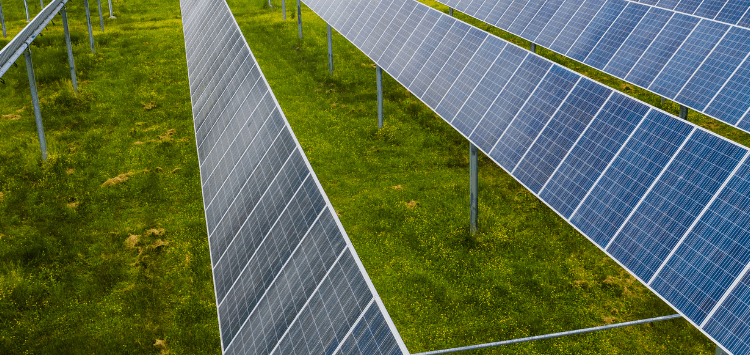
    With budget negotiations wrapping up, it is critical that lawmakers hear from constituents now to ensure the FY27 State Budget includes measures to eliminate greenhouse gas emissions and drive New York’s transition to affordable clean energy. Among the most important priorities that must be included in the final budget are investing $3 billion a year in the Sustainable Future Fund, passing the ASAP Act to boost solar energy development, and enacting a sales tax exemption for utility-scale battery energy storage systems.  These actions are absolutely critical, especially in light of the proposed weakening of the Climate Leadership and Community Protection Act.

    Learn More
  • NYLCV Examines 2026 NYCHA Sustainability Agenda

    On Earth Day, the New York City Housing Authority released their 2026 Sustainability Agenda. It comes 10 years after its last agenda, and NYC has made many incredible strides in climate policy since then. Building on the work they have already done, NYLCV is excited about what this agenda proposes and supports the goals set forth. NYCHA sustainability centers on six key priorities: 1) promoting resident health and well-being; 2) addressing NYCHA’s priority physical needs; 3) increasing funding for property upgrades and operations; 4) reducing energy and water usage and greenhouse gas emissions; 5) increasing resiliency to flooding; and 6) increasing resiliency to extreme heat.  Through this, the 2026 Sustainability Agenda commits itself to turn these principles into action with 9 goals that will be accomplished in the next five years, specifying a quantitative target for each goal, and laying out the specific strategies that will be undertaken to reach these targets by 2031. NYLCV dives into these goals below, explaining how NYCHA plans to execute them and what they mean for the environment.

    Learn More
  • Legislative Priorities for a Sustainable and Equitable NYC

    As we near the halfway mark for 2026, NYLCV remains committed to fighting for a sustainable and equitable New York City. Now more than ever, this city has the responsibility to implement policy to benefit both the environment and New Yorkers. From public transportation to battery energy storage bills, lawmakers have several opportunities to show leadership when it comes to fighting climate change. 

    Learn More
School Budget Votes Across New York Mark Major Progress Toward a Zero-Emission Fleet
Voters in the vast majority of school districts with ESBs on the ballot said yes to protecting kids’ health, reducing harmful diesel pollution, and accelerating the transition to a fully electric school bus fleet by 2035.
Learn More
NY’s Extreme Heat Action Plan (Not a Moment Too Soon)
The plan – which was developed through a collaborative community planning process with local organizers and 29 state agencies – provides a roadmap for the entire New York State government to improve extreme heat resiliency and mitigation, especially in vulnerable and disadvantaged communities.
Learn More
Proposed NY Budget Cuts Concern Advocates for Cleaner School Drinking Water
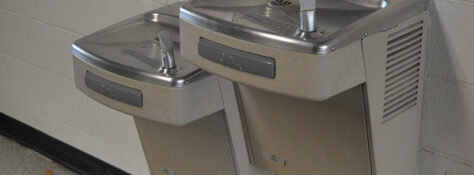
Lead is a poisonous heavy metal that causes significant adverse health effects, particularly in children. Unfortunately, Governor Hochul’s FY25 Executive Budget proposal slashed clean water funding by 50%, from $500 million to $250 million. With new programs like getting more lead out of school drinking water are coming online, now is the time to grow and not cut the clean water funding.
Learn More
Governor Hochul Says Yes to the Lead Pipe Right to Know Act
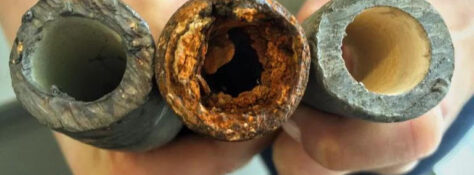
This commonsense law is a foundational step towards transparency and action. By mandating that data regarding lead pipe locations be made accessible to the public online, New Yorkers will be empowered with the knowledge of potential risks in their area and the ability to protect themselves and their families.
Learn More
Getting Close to Yes on the Lead Pipe Right to Know Act
The chairs of the Health Committee of the New York State Legislature -- Senator Gustavo Rivera and Assemblymember Amy Paulin – have introduced legislation, S.5512 / A. 6115 known as the “Lead Pipe Right to Know Act.” This bill will make information about the number and location of lead pipes easily accessible to the public and decision-makers, so that state and federal resources can be secured and efficiently disbursed to local efforts to get the lead out of New York’s drinking water by removing all lead pipes. 
Learn More
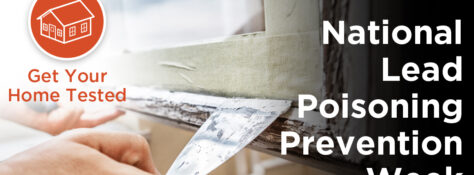
Picture of lead paint. National Lead Poisoning Prevention Week is October 23 to October 29.
News
National Lead Poisoning Prevention Week
According to health officials, there is no level of lead in the body that is known to be without harmful effects. That is why NYLCV is urging everyone - homeowners, health care providers, businesses, politicians, educators, etc. - to participate in the federal government’s upcoming National Lead Poisoning Prevention Week (NLPPW), which will be held Oct. 23-29, with wide dissemination of information and a series of topic-focused releases and webinars to spread awareness and lead to community and legislative action.
Learn More
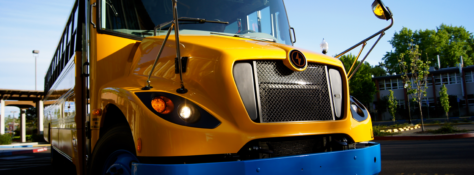
NY's Electric School Bus Push: What to Know
We’re all familiar with the yellow school buses of our childhood: the rattling sounds of metal, the squeals of our peers, leather seats that had seen better days. Their presence was an integral part to so many childhoods – so what’s being changed? Transportation is a leading contributor to greenhouse gas emissions in New York, accounting for a third of total overall emissions. Not only are these emissions harming the planet, but research has shown that they are also harming New York’s children, leading to higher levels of asthma. 
Learn More
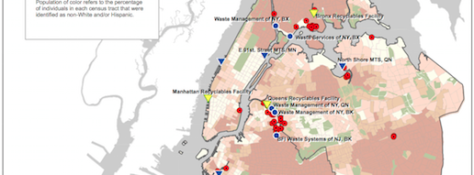
Cumulative Impacts
Black, Indigenous, and People of Color (BIPOC) communities are continuously burdened by the cumulative impacts of multiple hazardous environmental facilities being placed in their communities. Historically, minority communities and economically distressed communities have borne a disproportionate and inequitable share of environmental facilities such as landfills, waste transfer stations, and fossil fuel power plants. These industrial facilities cause significant health impacts such as asthma, lung and heart disease, increased birth defects, and learning impairments. The negative health impacts of poor air quality, polluted waters, toxic gasses, and more are exacerbated in these communities as a result of the cumulative burden of multiple sites. This bill addresses a fundamental issue of environmental racism, that communities of color should not have all the environmental hazardous facilities sited in their neighborhoods.
Learn More
  • 1
  • 2
  • 3
  • 4
  • …
  • 18
  • 19
  • 20
  • »
Stay CONNECTED
SIGN UP
DONATE NOW
New York League of Conservative Voters
New York League of Conservation Voters
30 Broad Street, 30th Floor, New York, NY 10004 // T: 212.361-6350 // F: 212.361.6363 // info@nylcv.org
  • About Us
  • NYLCVEF
  • Privacy & Copyright
  • Press Room
  • Contact
Website by Trillion